What Are AI Agents?
Exploring AI agents, their types, and how they're transforming automation and decision-making.
What Are AI Agents?
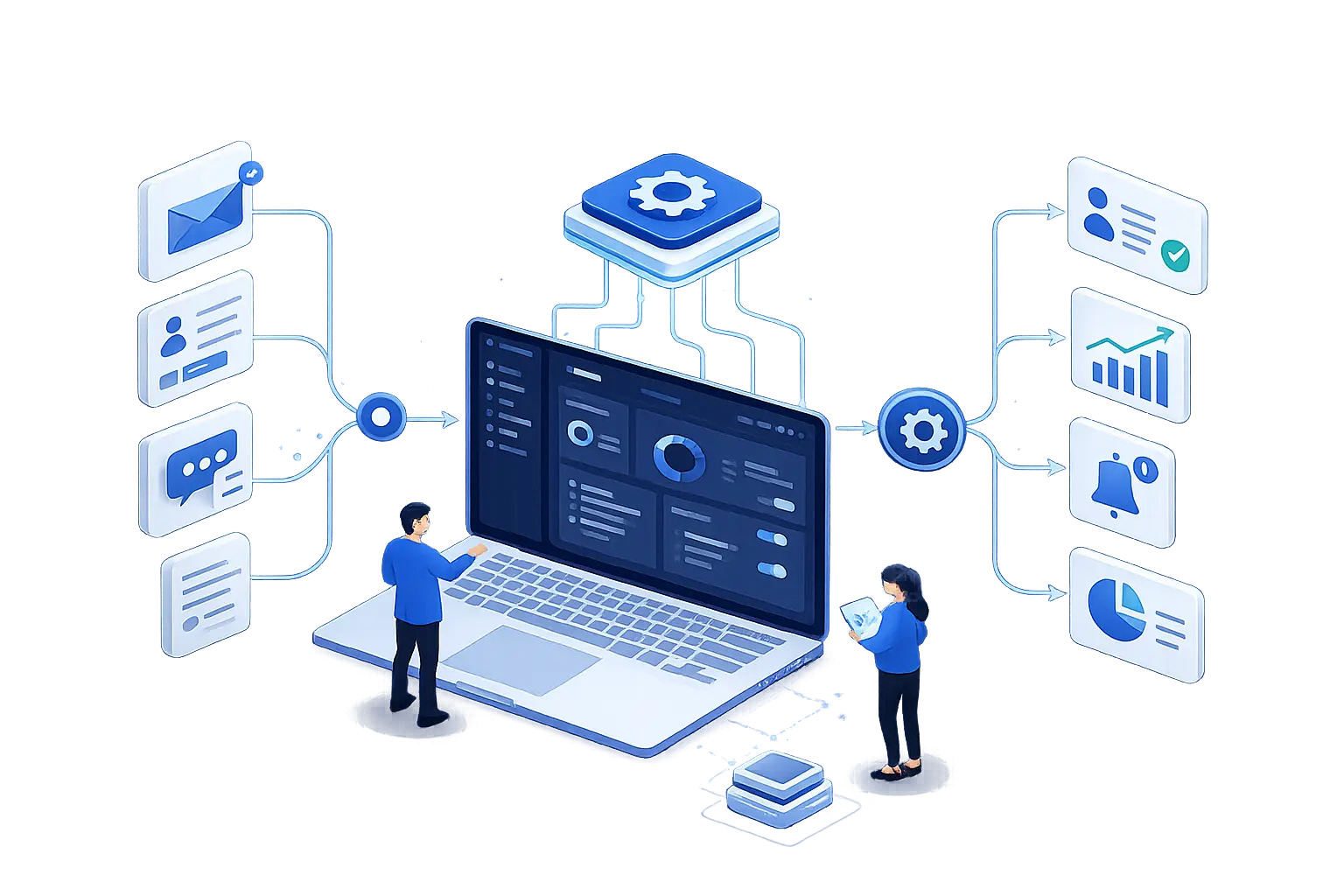
AI agents are systems built on top of large language models that can plan, make decisions, and take multi-step actions toward a goal — instead of just responding to a single prompt. Where a basic chatbot answers a question, an AI agent can break a goal into steps, call tools or APIs, check its own results, and keep working until the task is actually done.
This shift — from "answering" to "doing" — is what makes AI agents one of the most significant developments in enterprise AI right now. Instead of a human reading an AI's suggestion and acting on it, the agent itself executes the workflow.
How AI Agents Work
1. Planning
The agent breaks a high-level goal ("reconcile this month's invoices") into a sequence of smaller, executable steps.
2. Tool Use
Agents call external tools — databases, internal APIs, web search, code execution — to gather information or take action rather than relying only on what the model already knows.
3. Memory
Agents can retain context across steps (and sometimes across sessions), allowing them to handle multi-stage workflows without losing track of earlier decisions.
4. Self-Correction
Well-designed agents check their own output against the goal and retry or adjust their approach when something doesn't look right, rather than blindly continuing.
Business Use Cases for AI Agents
AI agents are moving from research demos into real production workflows across industries:
Where Companies Are Deploying AI Agents
- Customer support agents that resolve tickets end-to-end, not just answer FAQs
- Sales research agents that qualify leads and draft outreach automatically
- Finance agents that reconcile records and flag anomalies
- Coding agents that write, test, and fix code within a defined scope
- Operations agents that coordinate multi-step internal workflows
Designing AI Agents Responsibly
Because agents take real actions, guardrails matter more than with a simple chatbot. Production-grade agent systems need clear permission boundaries, human approval steps for high-stakes actions, logging for auditability, and fallback behavior when the agent isn't confident. RecGenz designs agentic systems with these safeguards built in from day one, so automation speeds up operations without introducing unnecessary risk.